



Certified standards and certified reference materials for laboratories and industry
Precision, traceability, and reliability: CRMs are essential tools for ensuring analytical data quality in any laboratory.
In the laboratory, measurement quality does not depend on the instrument alone. It also depends on the ability to verify, reproduce, and document the result.
This is where certified standards and certified reference materials (CRMs) come in: materials with known, traceable composition, produced according to strict international standards and used to calibrate instruments, validate analytical methods, control process quality, and ensure comparability of results over time and across laboratories.
QuantAnalitica offers a comprehensive selection of CRMs for major analytical techniques and industrial applications, supporting laboratories in selecting the material best suited to their specific requirements.
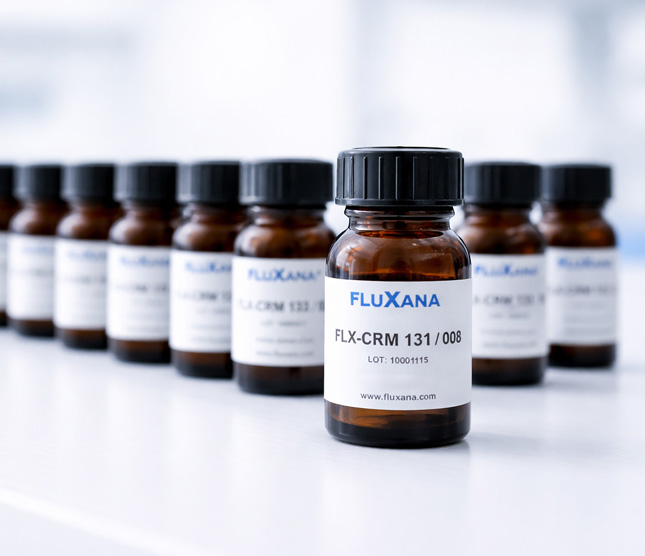
What are certified reference materials (CRMs)?
A certified reference material is much more than a comparison sample: it is the foundation of metrological traceability in the laboratory.
A certified reference material (CRM) is a solid, liquid, or gaseous substance for which one or more property values have been determined using validated metrological procedures and certified with a stated level of uncertainty. CRMs are produced by accredited bodies and laboratories according to ISO 17034 and supplied with certificates of analysis documenting composition, uncertainty, storage conditions, and expiry date.
They are essential reference tools for any laboratory that needs reliable, comparable, and documented analytical data.
The role of CRMs in quality control and analytical validation
Without certified reference materials, it is not possible to ensure the correctness, repeatability, and comparability of analytical results.
CRMs perform critical functions in the laboratory. They are used for the calibration of analytical instruments, establishing the relationship between the measured signal and analyte concentration. They are also used in method validation to demonstrate that an analytical procedure can produce reliable and repeatable results.
They are used in internal quality control (QC) programs, external quality assurance (QA), proficiency testing, and accreditation procedures according to ISO/IEC 17025. In regulated sectors such as pharmaceuticals, food, environmental analysis, and petrochemicals, the use of traceable CRMs is not optional but a regulatory requirement.

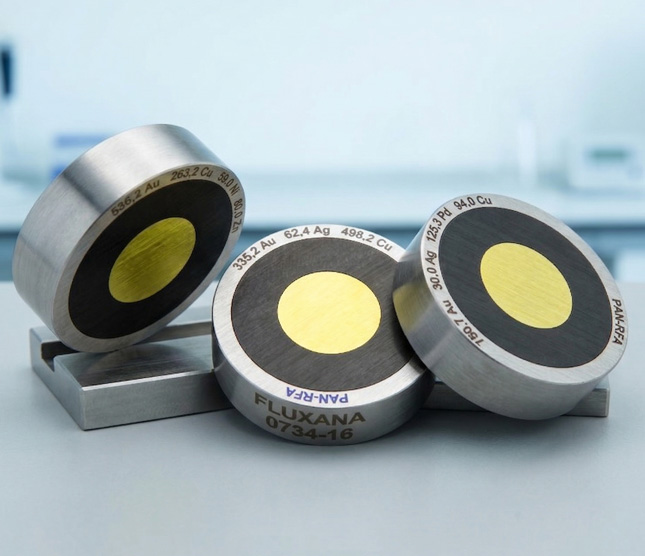
Certified standards for XRF analysis: X-ray fluorescence
Correct calibration of an XRF analyzer requires reference materials that match the matrix, composition, and physical form of the sample.
X-ray fluorescence (XRF) is one of the most widely used techniques for elemental determination in powders, solid samples, and, to a lesser extent, liquids. To ensure accurate results, XRF analyzers must be calibrated with certified standards that have known chemical composition, a matrix comparable to the real sample, and stated uncertainties.
QuantAnalitica provides XRF standards suitable for major applications, including metals and alloys, minerals, cements, ceramics, geological materials, soils, and sediments.
Selecting the right CRM in relation to the matrix and preparation technique—such as loose powder, pressed pellet, or fused bead—is a critical step where the technical team can provide specific guidance.
Certified reference materials for ICP-OES and ICP-MS
Multielement analysis in solution requires high-purity, traceable, and stable standards formulated for the operating conditions of ICP systems.
ICP-OES and ICP-MS are among the most sensitive and accurate techniques for chemical analysis in aqueous, biological, environmental, and industrial matrices. Reference materials for ICP are typically solutions with known concentration, organic or inorganic, single-element or multielement, with calibrated concentrations expressed in µg/L or mg/L.
QuantAnalitica provides a range of ICP-OES and ICP-MS standards designed to cover major calibration, verification, and quality control needs.
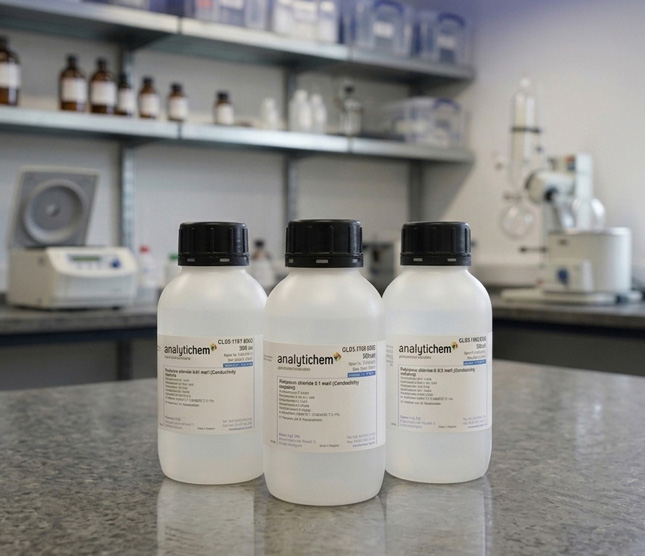
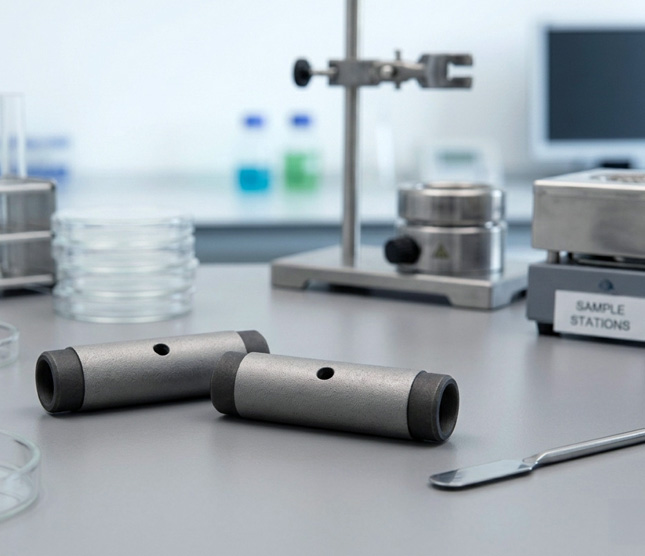
Certified standards for atomic absorption spectroscopy (AAS)
Atomic absorption spectroscopy requires reliable single-element standards with certified concentration and guaranteed stability.
Atomic absorption spectroscopy (AAS)—including flame AAS (FAAS), graphite furnace AAS (GFAAS), and hydride generation AAS (HGAAS)—remains a key technique for trace metal determination. AAS standards are single-element solutions in an acid matrix with certified concentration, essential for building calibration curves and controlling instrumental response.
QuantAnalitica offers a selection of high-quality AAS standards compatible with leading instrumental systems for environmental, food, clinical, and industrial applications.
Certified standards for oils, lubricants, and organic matrices
Analysis of mineral oils, fuels, and industrial fluids: standards formulated in the right matrix for reliable, traceable results.
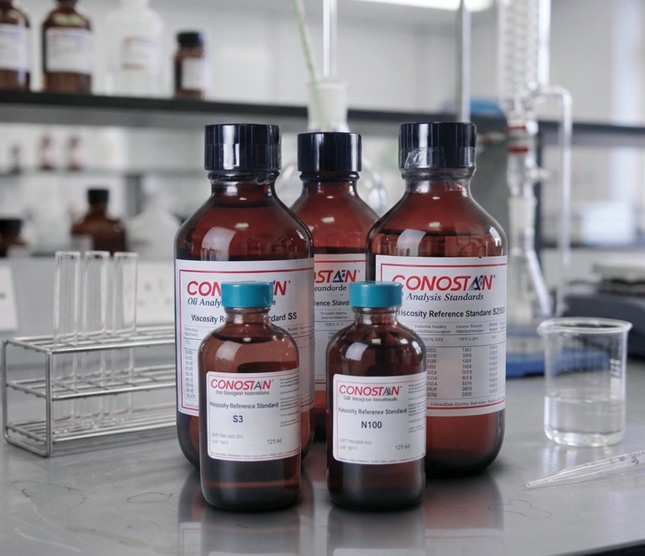
The analysis of mineral oils, lubricants, hydraulic fluids, fuels, and polymer materials requires certified standards formulated in an organic matrix, which is not compatible with common aqueous standards. QuantAnalitica provides both oil-matrix reference materials for the determination of wear metals, contaminants, and additives, and organometallic standards in organic solvent, available as single-element and multielement solutions with concentrations expressed in mg/kg or µg/g.
These solutions are compatible with ICP-OES, ICP-MS, AAS, and XRF techniques for condition monitoring, production quality control, and regulatory compliance verification in petrochemical and industrial applications.

Choosing the right CRM: QuantAnalitica's consulting support
With a wide range of materials available, choosing the right CRM is not always straightforward. QuantAnalitica supports laboratories in this decision with application-focused technical expertise.
Selecting a certified reference material cannot be reduced to a catalog search. It depends on specific variables: analytical technique, sample matrix, expected analyte concentrations, applicable regulatory requirements, frequency of use, and method of use.
QuantAnalitica’s technical team can analyze these variables and guide customers toward the most suitable CRM, helping avoid incorrect purchases, compatibility issues, and non-conformities in accreditation programs.
Search for the certified standard best suited to your application
Filter by matrix, application, unit of measurement, and element to identify the reference material most consistent with your analytical method.